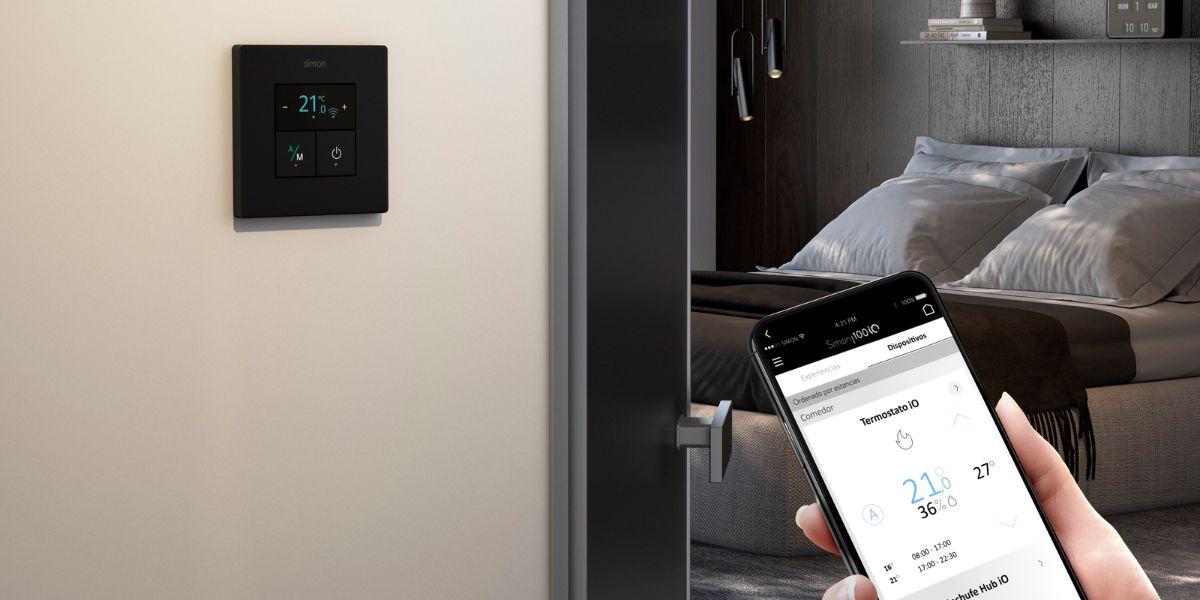
What is Home Automation and how does it work?
In order to understand what home automation is, we can describe it as the set of technologies that enable the automation and intelligent control of different systems and devices in the home.
Home automation is based on the integration of sensors, actuators, and communication systems to facilitate the efficient management of lighting, climate control, security, appliances, and other aspects of the home.
Thanks to home automation, users can have greater control over their environment and enjoy benefits such as energy savings, comfort, and advanced security.
Main components of home automation
Home automation consists of different elements that work together to provide automation and control in the home. These components include:
Sensors: They allow capturing information from the environment, such as motion detection, temperature, humidity, brightness, among others. Sensors are fundamental for the home automation system to adapt and respond to the needs of the home.
Actuators: These are the devices responsible for executing actions based on the information collected by the sensors. Common examples of actuators include smart switches, motorized valves, and motors for blinds, among others.
Controllers: They are responsible for processing the information from the sensors and sending commands to the actuators. Controllers are the brain of the home automation system and can range from small microcontrollers to powerful automation equipment.
Communication networks: They allow the interconnection of the different devices in the home automation system. They can be wired networks like Ethernet or wireless networks like Wi-Fi, Zigbee, or Z-Wave. The choice of communication network will depend on the needs and characteristics of the home.
Advantages of home automation
Home automation offers numerous advantages for households and their inhabitants. Some of the most notable advantages are:
Energy savings: Home automation allows for intelligent control of lighting and climate, which reduces energy consumption by adapting to actual needs and avoiding unnecessary waste.
Advanced security: Home automation systems integrate alarms, smoke detectors, video surveillance, and other devices that contribute to greater home security. Additionally, real-time notifications can be received about potential incidents.
Comfort and convenience: Home automation facilitates the automation of tasks, such as turning lights on and off, opening blinds, or programming appliances. This provides greater comfort and simplifies daily routines.
Remote management: Through mobile applications or online platforms, it is possible to control and monitor home automation devices from anywhere, even when not at home.
How Home Automation Works in Practice
Home automation is implemented through the interconnection of different devices and systems in the home. These devices communicate with each other via communication networks, either through cables or wirelessly. Sensors capture information from the environment and send it to the controllers, which process the data and make decisions based on it. Then, the controllers send commands to the actuators to perform the necessary actions, such as turning lights on or off, regulating temperature, or activating alarms.
Home automation technology can also be controlled through mobile devices or voice assistants, providing greater flexibility and ease of use. For example, it is possible to program custom scenes, such as "night mode," which turns off all the lights and activates the security alarm. Additionally, notifications can be received and adjustments can be made in real-time from anywhere.
How to implement home automation in your home
To successfully implement home automation in your home, we provide a series of tips to follow, which you can use as a starting point either to implement home automation in your home or to seek advice from professionals.
Planning: Analyze your needs and define which aspects of the home you want to automate. This will help you select the appropriate devices and systems for your specific case.
Device selection: Research and choose devices that are compatible with your needs and preferences. Ensure they are of good quality and meet safety standards.
Installation: Follow the installation instructions for each device or, if necessary, seek the help of a professional. Make sure to connect and configure the devices correctly and that they are integrated into the home automation network.
Programming: Set up the devices and systems according to your preferences and needs. Schedule times, adjust parameters, and customize the automation according to your daily routines.
Testing and adjustments: Conduct tests to ensure that all devices are functioning correctly and that the automations are executing as expected. Make adjustments if necessary to improve efficiency and user experience.